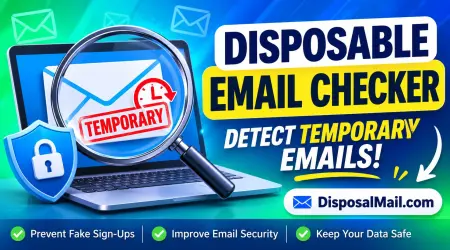
Disposable Email Checker 📧 | Detect Temporary Email Addresses – DisposalMail
Introduction to Disposable Email Addresses
Email communication has become an essential part of modern life. Whether you are registering for a website, subscribing to a newsletter, creating an online account, or purchasing a product, an email address is often required. Businesses use email addresses to communicate with customers, send important notifications, deliver promotional offers, and maintain long-term relationships. However, not every email address entered into an online registration form belongs to someone who wants to maintain a permanent relationship with the business. Some users prefer temporary email addresses that can be used for a short period and then abandoned. This creates challenges for website owners, marketers, developers, and online businesses that depend on accurate customer information.
A Disposable Email Checker helps identify email addresses associated with temporary email services. These services allow people to receive messages without using their primary inbox. Although temporary email addresses can be useful for privacy and testing, they may also be used for fake registrations, repeated promotional sign-ups, and other activities that affect business data quality. That is why email verification has become an important part of responsible website management.
DisposalMail.com is associated with the disposable email category and provides a useful starting point for understanding temporary inboxes and email privacy. By learning how disposable email detection works, businesses can make better decisions about registration security while ordinary users can understand when temporary email services are appropriate.
Temp Mail – Free Temp Mail Service : DisposalMail 🚀 Try It Online
What Is a Disposable Email Address?
A disposable email address is an email address designed for temporary use rather than long-term communication. Unlike a traditional email account that someone may use for years, a disposable address is often created for a specific registration, download, website visit, or online activity. Depending on the provider, the inbox may remain available for a limited period, until the user deletes it, or according to the service's retention policy.
For example, imagine that you want to download a free resource from a website, but you do not want to receive promotional emails in your primary inbox. You might choose a temporary email address to receive the download confirmation. Once you have received the message, you may never need that address again. This approach can help separate one-time online activities from important personal communication.
Temporary email addresses are not necessarily fake or technically invalid. Many of them can receive genuine messages while their inboxes remain active. The difference is that they are generally intended for short-term use.
What Is a Disposable Email Checker?
A disposable email checker is a verification tool or service that evaluates whether an email address is associated with a known temporary email provider. It typically examines the domain portion of an email address and compares it against databases or detection rules containing disposable email domains.
For example, an address can be divided into two parts:
Local part: The text before the @ symbol.
Domain part: The text after the @ symbol.
A disposable email detection service focuses heavily on the domain because temporary email providers commonly operate recognizable domains that appear in disposable-domain databases.
A checker may return a result such as:
Disposable: The domain is recognized as a temporary email provider.
Non-disposable: The domain is not recognized as a disposable provider.
Unknown: The available information is insufficient to make a confident determination.
It is important to understand that a non-disposable result does not guarantee that an email address belongs to a real person. Similarly, a disposable result does not automatically mean that someone is attempting fraud. Detection should be treated as one part of a broader verification process.
Why Do People Use Temporary Email Services?
People use temporary email addresses for different reasons, and privacy is one of the most common motivations. When someone visits an unfamiliar website, they may not want to share their primary email address immediately. A temporary inbox can help reduce unwanted marketing messages and keep their personal inbox more organized.
Developers also use temporary email services when testing websites and applications. For example, a developer might need to test registration forms, password-reset messages, email notifications, and confirmation links without creating dozens of permanent accounts. Temporary inboxes can make these testing activities more convenient.
Other common reasons include:
Avoiding unnecessary promotional messages.
Testing email delivery and registration workflows.
Separating one-time registrations from personal communication.
Exploring unfamiliar websites.
Protecting an ordinary inbox from excessive subscriptions.
However, temporary addresses should not be used for critical accounts that require long-term access, such as banking, financial services, or important personal accounts.
What Is a Disposable Email and How It Works?
What Is a Disposable Email Checker?
A disposable email checker is a practical solution for identifying temporary email addresses before they become part of a website's customer database. Businesses often collect email addresses through registration forms, contact pages, free downloads, subscription forms, and online purchases. Without proper verification, temporary addresses can enter these databases and create problems later. For example, a website might receive hundreds of registrations from users who only want to access a free offer once. These registrations may increase account numbers without producing meaningful customer engagement. A disposable email checker helps website administrators recognize this pattern and decide how to handle suspicious submissions.
The technology behind these tools is relatively straightforward, but effective detection requires more than checking whether an address looks unusual. A good detection process considers the email domain, known temporary email provider lists, domain configuration, and other available signals. Some tools also provide API integrations so developers can automatically check addresses whenever someone submits a registration form. The goal is not simply to reject email addresses but to improve the reliability of communication between a website and its users.
How Does Disposable Email Detection Work?
Most disposable email detection systems use several verification methods to evaluate an address. The first step is usually checking its basic format. An address such as [email protected] follows a recognizable structure, while an address without an @ symbol or a valid domain structure may be rejected as malformed. After format validation, the checker examines the domain to determine whether it belongs to a recognized temporary email provider.
A disposable-domain database is one of the most important parts of this process. It contains domain names associated with temporary inbox services. When a submitted address matches an entry, the system can classify it as potentially disposable. More advanced verification systems may also inspect DNS information, including Mail Exchange (MX) records, to understand whether a domain has mail-handling infrastructure. However, an MX record alone cannot establish whether an address is temporary or permanent. It only provides information about how email for that domain may be routed. The technical distinction is important because a valid-looking address is not necessarily a permanent or deliverable mailbox.
A typical detection workflow looks like this:
Receive the email address submitted by the user.
Check whether its format is valid.
Extract and normalize the domain.
Compare the domain with a disposable email database.
Perform additional DNS or domain checks when appropriate.
Return a classification and let the website apply its registration policy.
The result is an informed assessment rather than absolute proof of the user's identity or intentions.
Why Businesses Need to Detect Temporary Email Addresses
For an online business, an email address is more than a simple contact detail. It can serve as a communication channel, an account recovery method, a subscription identifier, and a way to maintain relationships with customers. When users submit temporary addresses, businesses may struggle to maintain reliable communication. Imagine running an online store where customers register for accounts using temporary inboxes. You might send order updates, delivery notifications, discount codes, and important service announcements, only to discover that some recipients can no longer access their inboxes.
This does not mean every temporary email user is dishonest. Some people use these services for legitimate privacy reasons. However, businesses need to understand the risks associated with temporary addresses, especially when offering free trials, referral bonuses, promotional credits, or registration rewards. A reliable detection process helps identify potentially suspicious activity before it becomes a larger operational problem.
Preventing Fake Registrations and Spam
Fake registrations can make a website appear more popular than it actually is. A platform might report thousands of new accounts, but a significant portion could belong to people who never intend to use its services again. This creates misleading performance statistics and makes it harder for administrators to understand genuine customer growth.
Disposable email detection can help identify repeated sign-ups associated with known temporary domains. When combined with other security measures, it can reduce opportunities for people to create multiple accounts to claim promotional benefits or abuse referral systems. For example, an online platform offering a welcome bonus might review registrations from disposable domains before approving rewards.
However, blocking every temporary address is not always the best solution. Some legitimate users may need privacy, and some temporary email providers may not appear in a detection database. A better approach is to consider the overall risk of each registration. A website could request additional verification, apply promotional limits, or manually review suspicious activity instead of automatically rejecting every user.
How to secure your emails and accounts!
Protecting Marketing Campaigns and Customer Data
Email marketing depends on having an audience that can receive and engage with messages. If a marketing database contains many temporary addresses, campaign performance measurements can become less useful. Some addresses may stop receiving messages after their inboxes expire, while others may never have been intended for ongoing communication.
This can create unnecessary work for marketing teams. They may spend time preparing campaigns for recipients who will never become customers. Repeated delivery failures can also make it more difficult to maintain a healthy email list. Businesses should therefore combine disposable email screening with normal email verification, unsubscribe management, and bounce monitoring.
Another important consideration is data quality. Businesses use customer records to understand buying behavior, measure campaign performance, and improve services. Temporary addresses do not automatically make customer records useless, but they can reduce the reliability of long-term communication data. Proper screening helps companies build more dependable records without assuming that every person using a temporary inbox is a bad customer.
How to Identify a Temporary Email Address
Identifying a disposable email address requires examining the available information rather than making assumptions based on appearance. Some temporary addresses look almost identical to ordinary email addresses. They may contain realistic usernames, familiar domain structures, and correctly formatted characters. This is why simply looking at an email address is not a reliable detection method.
A dedicated checker provides a more systematic way to evaluate an address. It can compare domains against known provider databases and, depending on the service, perform additional technical checks. Website owners can also introduce their own verification procedures to reduce unwanted registrations. The most effective approach combines automated detection with sensible account policies.
Check the Email Domain
The domain is one of the most useful indicators when identifying disposable email addresses. Consider the following example:
In this example, user is the local part, while examplemail.com is the domain. Disposable email services often operate recognizable domains that are included in publicly maintained or commercially maintained detection lists.
A checker compares the submitted domain with its available database. If the domain appears on a known disposable provider list, the result may indicate that the address is temporary. Some systems also account for capitalization and subdomains so that simple variations do not bypass detection.
It is important to keep domain databases updated. New temporary email providers appear, existing providers change their domains, and some services discontinue operations. A database that has not been maintained may miss newer providers or incorrectly classify addresses.
For businesses managing large registration volumes, automated domain checking can be particularly useful. Rather than asking an administrator to inspect every submission manually, the website can evaluate the domain during registration and apply the appropriate policy.
Use Domain Reputation and DNS Checks
Domain reputation and DNS information provide additional technical signals. DNS is the system that helps computers locate services associated with domain names. In email communication, MX records identify mail servers responsible for receiving messages for a domain.
A DNS check can help determine whether a domain has an appropriate mail-routing configuration. If the domain does not resolve correctly, the address may be unable to receive messages. However, the presence of MX records does not prove that the mailbox is permanent, trustworthy, or even accessible to the person submitting it.
A useful verification system should distinguish between different results:
| Verification result | What it means | Recommended action |
|---|---|---|
| Valid format | Address follows an accepted structure | Continue verification |
| Disposable domain | Domain matches a known temporary provider | Apply risk-based policy |
| No usable mail routing | Domain may not receive email | Request correction or review |
| Unknown domain | Detection database has insufficient information | Use additional verification |
| Ownership verified | User completed an email confirmation process | Continue account activation |
The distinction between domain checks and ownership verification is especially important. According to the OWASP Email Validation and Verification Cheat Sheet, websites should verify email ownership before enabling account use and should use secure, single-use, time-limited verification tokens.
Free Temporary Email Without Registration | DisposalMail
Disposable Email vs. Permanent Email
Disposable and permanent email addresses both allow people to receive electronic messages, but they are designed for different purposes. A permanent email address is generally intended for ongoing communication. People use it for personal conversations, professional activities, account recovery, subscriptions, and important notifications. A disposable email address, on the other hand, is generally intended for short-term activities where maintaining a lasting inbox is unnecessary.
For example, someone applying for a job may prefer a permanent email address because recruiters could contact them weeks or months later. Someone downloading a one-time document from an unfamiliar website might prefer a temporary address to avoid unnecessary promotional messages. Both choices can be reasonable depending on the circumstances.
Here is a practical comparison:
| Feature | Disposable Email | Permanent Email |
|---|---|---|
| Main purpose | Short-term communication | Long-term communication |
| Inbox duration | Often limited or temporary | Generally ongoing |
| Privacy | Can help separate one-time activities | Depends on provider and settings |
| Account recovery | Often unreliable for long-term use | More suitable |
| Marketing subscriptions | Useful for avoiding unwanted messages | Suitable for ongoing subscriptions |
| Website testing | Convenient for temporary testing | Useful for production accounts |
| Important notifications | Generally not recommended | Recommended |
| Long-term accessibility | Not guaranteed | Usually more reliable |
Neither category is automatically safe or unsafe. A permanent email address can be compromised, and a temporary address can be used for legitimate purposes. Businesses should evaluate the actual risk associated with an address and the activity taking place on their platforms.
Benefits of Using DisposalMail.com
DisposalMail.com is relevant to people exploring temporary email services and disposable inbox solutions. Temporary email technology can help users separate short-term online activities from their main communication channels. Rather than sharing a personal inbox every time a website requests an email address, users can consider a temporary inbox when the activity does not require permanent access.
One of the main advantages of temporary email services is convenience. People regularly encounter websites that request email registration before providing access to a free resource, online tool, or downloadable document. If the user does not expect to maintain a relationship with that website, a temporary inbox may provide a practical alternative.
Privacy is another consideration. Sharing an email address with multiple websites can increase the number of places where personal contact information is stored. A temporary email address can help users reduce unnecessary exposure when signing up for low-risk services. However, temporary email should not be treated as complete anonymity. Websites may still collect IP addresses, browser information, cookies, and other technical data.
For developers and testers, temporary inboxes can also support development workflows. They may use disposable addresses to test registration forms, confirmation messages, and email notification systems. This can reduce the need to create numerous permanent accounts for routine testing.
Practical Uses of Temporary Email Services
Temporary email services can be useful in several everyday situations:
Website exploration: Testing an unfamiliar website without immediately sharing a primary email address.
Software development: Checking registration and notification workflows during development.
One-time downloads: Receiving a confirmation message for a single resource.
Inbox organization: Separating short-term subscriptions from important communication.
Educational testing: Demonstrating email registration and delivery concepts in controlled environments.
Before using a temporary address, users should consider whether they might need the account later. If a website sends important documents, financial information, account recovery links, or ongoing service notifications, a permanent email address is generally the better option.
Best Practices for Email Verification
Email verification should be treated as an ongoing part of website security rather than a single check performed during registration. A disposable email checker can provide useful information, but it cannot independently establish that a user is genuine or that a mailbox belongs to them. Businesses should build a layered verification process that considers address format, domain information, ownership confirmation, account activity, and the type of service being requested.
The first best practice is to validate the address structure using a well-tested email validation library. Avoid relying entirely on complicated custom regular expressions because legitimate email formats can be more varied than many developers expect. OWASP recommends accepting valid email formats broadly and rejecting clearly malformed input rather than creating unnecessarily restrictive rules.
The second practice is to maintain an updated disposable-domain database. A website that uses an old database may miss recently introduced temporary email services. Businesses should periodically update their lists or use a reputable verification provider that maintains current detection information.
The third practice is to verify email ownership. Send a confirmation message containing a cryptographically secure, single-use token that expires after a reasonable period. Do not activate sensitive account features until the user has completed the required confirmation process.
Another important practice is to apply risk-based registration controls. For example, a website offering a free newsletter may allow temporary email addresses, while a platform providing financial services may require stronger identity and account verification. The right policy depends on the potential consequences of misuse.
Finally, protect customer information throughout the verification process. Avoid storing unnecessary personal information, mask email addresses in application logs where practical, and never log sensitive verification tokens or complete password-reset URLs. OWASP specifically recommends monitoring abnormal activity while limiting exposure of sensitive email-related data.
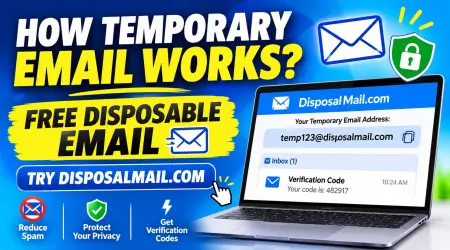
How Temporary Email Works 📧 | Free Disposable Email Guide
Pros and Cons of Disposable Email Detection
Disposable email detection offers several advantages for website owners, online businesses, marketing teams, and developers. It can help reduce unwanted registrations, improve customer database quality, and identify potentially suspicious activity. However, like any automated verification technology, it has limitations. A detection system cannot always identify every temporary email provider, and some legitimate users may prefer temporary inboxes for privacy reasons.
Understanding both sides helps businesses create a fair registration policy instead of relying on automatic rejection for every suspicious address.
Advantages of Disposable Email Checkers
1. Better registration quality: Disposable email checkers help identify addresses associated with temporary inbox providers. This gives businesses more information when evaluating new registrations and promotional account activity.
2. Reduced fake sign-ups: Websites that offer free trials, referral rewards, or registration bonuses can use disposable-domain detection as one layer of protection against repeated registrations.
3. Improved email marketing: Screening suspicious addresses can help businesses maintain cleaner subscriber databases and reduce communication with short-lived inboxes.
4. Automated verification: Many detection solutions support APIs, allowing developers to integrate disposable email checks into registration forms and other online workflows.
5. Better decision-making: Businesses can use detection results alongside other risk signals to decide whether to approve, review, or request additional verification for an account.
Disadvantages of Disposable Email Checkers
1. False positives: Some legitimate email services may be incorrectly classified, particularly when detection databases contain inaccurate information.
2. Incomplete databases: New disposable email providers may appear before they are added to detection lists.
3. Privacy concerns: Businesses must handle email addresses responsibly and avoid collecting or storing unnecessary personal information.
4. Additional development work: API integration, database maintenance, and verification workflows may require technical resources.
5. No guarantee of genuine identity: Even a permanent email address does not prove that the person registering is genuine or trustworthy.
The following table summarizes the advantages and disadvantages:
| Pros | Cons |
|---|---|
| Identifies known disposable domains | Cannot detect every temporary provider |
| Helps reduce suspicious sign-ups | May produce false positives |
| Improves marketing list quality | Requires database updates |
| Supports automated verification | May require integration work |
| Provides additional risk signals | Does not verify personal identity |
The best solution is to use disposable email detection as part of a broader verification strategy. This provides useful protection without unnecessarily preventing legitimate people from accessing online services.
Free Random Email Generator Online
Conclusion
A Disposable Email Checker is a valuable tool for identifying temporary email addresses and improving the quality of online registrations. As more websites depend on email communication for account creation, customer support, marketing, and security notifications, understanding the difference between disposable and permanent email addresses becomes increasingly important.
Temporary email services have legitimate uses. They can help people protect their primary inboxes, explore unfamiliar websites, and test applications without creating multiple permanent accounts. At the same time, businesses need to recognize that temporary addresses can create challenges when used for fake registrations, promotional abuse, or unreliable customer communication.
Using a reliable disposable email detection process helps website administrators make better decisions. Checking known disposable domains, reviewing DNS information, verifying email ownership, and monitoring unusual registration patterns can provide multiple layers of protection. However, no single detection method can guarantee that every email address belongs to a genuine person.
DisposalMail.com is a relevant resource for understanding disposable email services and temporary inbox technology. Whether you are an ordinary internet user, website owner, digital marketer, or developer, learning how disposable email detection works can help you make more informed decisions about online privacy and email verification.
The key is to balance security, convenience, and privacy. Instead of automatically assuming that every temporary email user is suspicious, use appropriate verification methods and apply policies according to the risks involved. A thoughtful approach creates a better experience for genuine users while helping businesses maintain more reliable digital platforms.
Frequently Asked Questions (FAQs)
Q1. What is a disposable email checker?
A disposable email checker is an online tool or verification service that identifies whether an email address belongs to a known temporary email provider. It generally checks the domain against a database of disposable email services and may perform additional technical checks. Businesses use these tools to identify potentially temporary addresses during registration, subscription, and account verification.
Q2. How can I detect a temporary email address?
You can detect a temporary email address by checking its domain against a disposable email database. Additional checks may include email format validation, DNS information, and domain reputation. A dedicated disposable email checker can simplify this process and provide a classification of the submitted address.
Q3. Are disposable email addresses safe to use?
Disposable email addresses can be useful for low-risk activities, such as website exploration and software testing. However, they are not recommended for banking, financial accounts, important subscriptions, or services requiring long-term account recovery. Always consider the privacy and security policies of the temporary email provider.
Q4. Can businesses block temporary email addresses?
Yes. Businesses can integrate disposable email detection into their registration systems and choose whether to block, flag, or review addresses associated with temporary providers. A risk-based approach is generally preferable because some legitimate users rely on temporary inboxes for privacy. alternative
Q5. What is the difference between email verification and disposable email detection?
Email verification checks whether an address is correctly formatted and may establish whether the user can receive and confirm a message. Disposable email detection checks whether the address belongs to a known temporary email provider. These processes serve different purposes and work best when used together.
#DisposableEmailChecker #TemporaryEmail #EmailVerification #DisposableEmail #EmailSecurity #DisposalMail #TemporaryInbox #OnlinePrivacy #EmailValidation #TechTools
Disposable Email Checker, Detect Temporary Email Addresses, Disposable Email Detection, Temporary Email Checker, Email Verification, Email Validation, Disposable Email Domain, Temporary Inbox, Free Disposable Email, DisposalMail.com, Online Privacy, Email Security, Fake Email Detection, Email Marketing, Temporary Mail Service.